
Filament

3D printing filaments come in a wide range of materials, each with unique properties suited for specific applications, from basic PLA to high-performance engineering filaments.
Common 3D Printing Filaments
PLA (Polylactic Acid): A biodegradable, easy-to-print filament ideal for beginners. It offers good surface finish and low warping but is less heat-resistant and brittle compared to other filaments
ABS (Acrylonitrile Butadiene Styrene): Strong, impact-resistant, and slightly flexible, making it suitable for functional parts and mechanical components. Requires higher printing temperatures and may warp without a heated bed
PETG (Polyethylene Terephthalate Glycol): Combines strength, flexibility, and chemical resistance. It is less brittle than PLA and easier to print than ABS, making it ideal for containers, mechanical parts, and outdoor applications .
TPU (Thermoplastic Polyurethane): A flexible filament used for phone cases, wearable items, and parts requiring elasticity. It is durable and impact-resistant but requires slower print speeds
Nylon (Polyamide): High strength, abrasion-resistant, and slightly flexible. Suitable for gears, bearings, and functional mechanical parts. It is hygroscopic and requires careful drying before printing
ASA (Acrylonitrile Styrene Acrylate): Similar to ABS but with superior UV resistance, making it ideal for outdoor applications
HIPS (High Impact Polystyrene): Often used as a dissolvable support material with limonene. It is strong and impact-resistant
PVA (Polyvinyl Alcohol): Water-soluble filament used for support structures in dual-extruder printers.
Refine Search

E-SUN Pla Filament 1.75mm
eSun PLA Basic is your cost-effective fast printing filament with enhanced fluidity to reach 30mm3/s..
R 286.06 Ex Tax: R 248.75
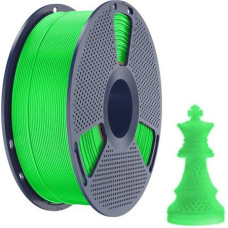
SUNLU PETG Filament 1.75mm
Although many people look at 3D Printing and consider it to just be for decorational purposes, the t..
R 271.69 Ex Tax: R 236.25

SUNLU Pla+ Filament 1.75mm
Although many 3D Makers typically regard PLA Filaments as some of the most basic, being widely popul..
R 316.08 Ex Tax: R 274.85
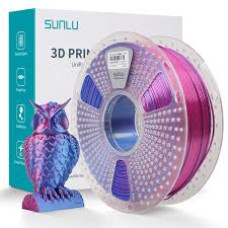
SUNLU PLA+ Red Blue 1.75mm
When taking a good look at 3D printing as a whole, it’s always great to see how there are so many di..
R 395.43 Ex Tax: R 343.85